Antique catalog template for dealers in furniture, clocks and curios
A design kit for antique dealers and vintage shops: typewriter labels, lot tags and real photography, with pages for condition reports, a period dating guide, sale days and conditions of sale.
Free plan available — all templates are included on every plan. Already have an account? Open it in Templates.


All 27 pages: 7 covers and 20 designed pages
Choose one cover and any of the designed pages — they share one look, so the catalog stays consistent however many you use. Every word, color and photo is editable.






Product pages that fill themselves
Import your products and they take this layout automatically — shown here with sample products. Switch the grid any time, from 2 × 2 to 4 × 5 or a one-column line sheet.


About the Vintage & Antiques template
This antique catalog template looks as if it was printed for a country shop decades ago. Old Standard TT headlines sit between double rules, typewriter labels in Courier Prime give lot numbers and prices, photos are held by photo corners and tagged like shop stock, and brick red picks out stamps and prices on parchment-colored paper. Its seven covers include a postcard from a barn sale, a typed index card and a quarterly magazine, followed by 20 designed pages.
It is built for selling one-of-a-kind pieces. Each lot can carry a condition report, dimensions, period and provenance, the dating guide shows buyers how to tell Georgian from Victorian, and the terms cover deposits, reservations and collection. Import stock from Shopify or a CSV file and it fills designed product pages and mosaic layouts; with Shopify, Sync can refresh prices and stock as pieces sell. Print it for regular customers or send a flipbook link to buyers far away.
Best for
- Antique dealers publishing a seasonal catalog of new stock
- Vintage furniture and lighting shops selling one-of-a-kind pieces
- Clock and watch restorers listing serviced pieces with condition notes
- Antique centers and barn sales promoting fair days and clearances
- Online vintage sellers who want a printed catalog for regular buyers
Pages worth a closer look
Lot page with a condition report
One piece per page: lot number, date and origin, price, a condition report in short lines, dimensions and weight, and a provenance note. It answers what a careful buyer asks before traveling to see a piece.
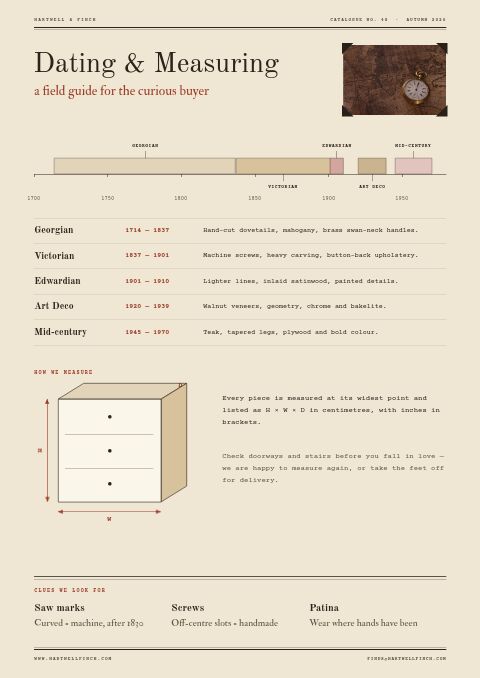
Dating and measuring field guide
A timeline from Georgian to mid-century with the clues that date a piece, such as hand-cut dovetails, machine screws or inlaid satinwood. It helps customers understand prices and shows that your descriptions are honest.
Shop history as an old newspaper
The brand story is laid out as a local newspaper front page from the year the shop opened, with a headline, columns and a photo caption. It is a memorable way to tell customers how long you have been trading.
Barn clearout sale poster
A sale page styled like an old auction bill, with the discount, the dates and opening hours set in mixed old-style type. Use it for clearance weekends, fair days or a corner of reduced stock.
How to write an antique catalog buyers trust
Describe condition plainly
List restoration, replaced parts and wear on every piece, in short lines like a condition report. Buyers expect age to show; what costs trust is a repair they discover after delivery. Note which work your own workshop carried out.
Date pieces carefully
Use circa dates and say how you dated a piece: construction, marks, materials or documented history. Label later pieces as vintage or in the style of a period, never as antiques, because customers and other dealers will notice.
Give dimensions for every piece
Height, width, depth and weight decide whether a chest fits a hallway or a clock fits a mantel. Give them in centimeters and inches if you sell abroad, and add seat height for chairs and drop for lighting.
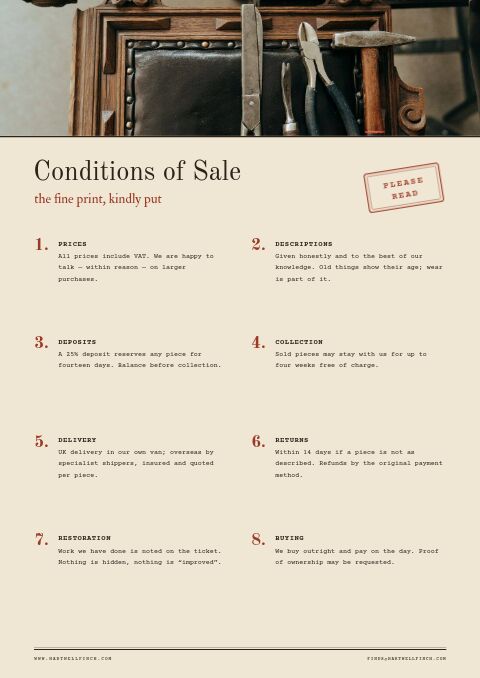
Explain deposits, collection and shipping
Antiques are often bought from a distance. State how long a deposit holds a piece, how collection works, and how you pack and ship large items at home and overseas. Clear terms turn remote inquiries into sales.
Photograph pieces honestly
Shoot each piece as it stands in the shop or a room setting, plus close-ups of marks, joints, signatures and any damage. Consistent light matters more than a perfect backdrop, and buyers trust photos that show the flaws.
From product list to finished catalog
Pick this template
Open Vintage & Antiques in EasyCatalog and choose the cover and the pages you want — every page is optional and editable.
Add your products
Import from Shopify in one click, or upload a CSV, connect WooCommerce or a product feed. Your products fill the product pages automatically.
Download or share
Export a print-ready PDF (up to 300 DPI, CMYK and bleed for print shops) or share an online flipbook with a built-in order form.
Questions about this template
What pages are in the Vintage & Antiques design kit?
Seven covers, including a barn-sale postcard, a typed index card and a quarterly magazine, plus 20 designed pages: letter from the proprietor, drawer-by-drawer index, restoration divider, recent finds, featured lot, newspaper-style story, the shopkeepers, how to order, most asked-after, barn clearout, ledger of numbers, fair ticket, letters from customers, FAQ, dating guide, care, contact, conditions of sale, notes and back cover.
Can I use this antique catalog for one-of-a-kind stock?
Yes, it is designed for it. Each product can be its own lot, with the lot number in the title or SKU, a condition report in the description and dimensions in the text or metafields. Designed product pages give single pieces room, while grid pages suit smaller curios and sets.
How often should an antique dealer publish a catalog?
Many dealers publish one catalog per season or per fair, because stock changes as pieces sell. A smaller catalog of recent finds every month or two, shared as a flipbook link, keeps regular buyers looking between the big editions.
What is the difference between antique and vintage?
In the trade, antique usually means at least 100 years old, while vintage covers younger pieces, often 20 to 99 years old, that show the style of their era. Reproductions should be labeled as such, and stating your own definitions on the terms page avoids confusion.


Start your Vintage & Antiques catalog
Pick this template, add your products and download a print-ready PDF or share an online flipbook. Free plan available, no card needed.