Hobby catalog template for model kit, die-cast and train distributors
Styled like a model-kit instruction sheet, this 27-page dealer catalog gives hobby distributors real bench photography, a scale and grading guide, and the terms hobby shops ask about first.
Free plan available — all templates are included on every plan. Already have an account? Open it in Templates.
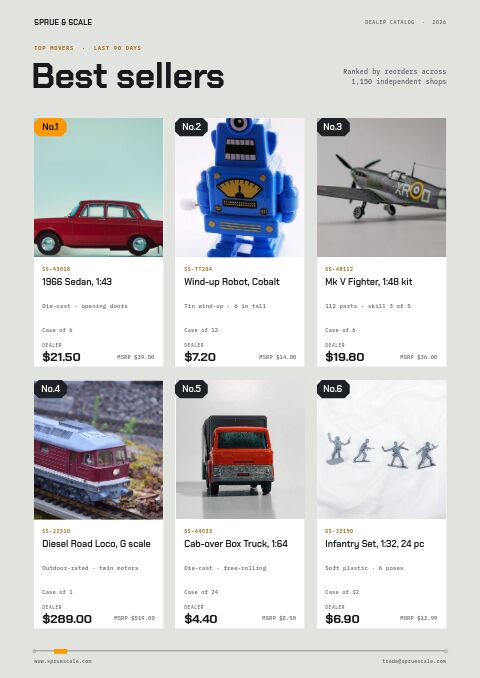


All 27 pages: 7 covers and 20 designed pages
Choose one cover and any of the designed pages — they share one look, so the catalog stays consistent however many you use. Every word, color and photo is editable.







Product pages that fill themselves
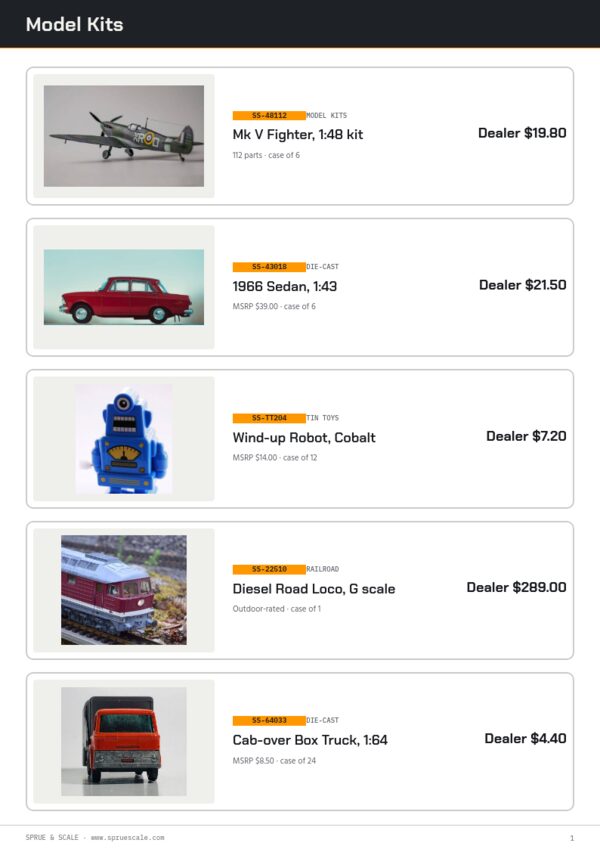
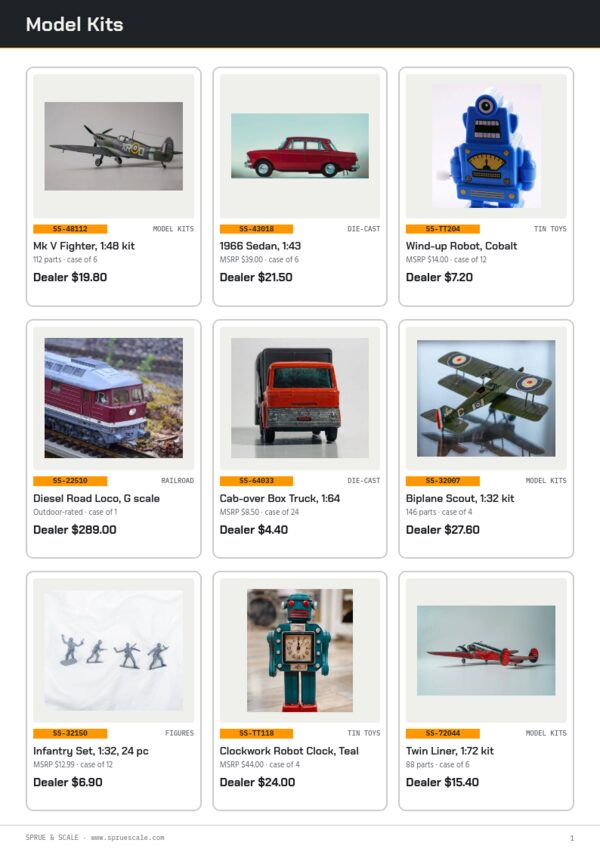
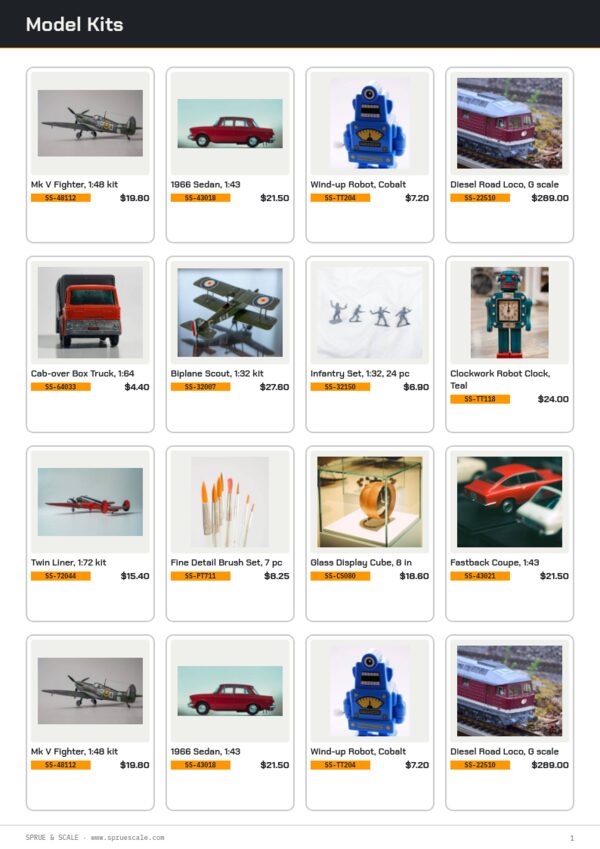
Import your products and they take this layout automatically — shown here with sample products. Switch the grid any time, from 2 × 2 to 4 × 5 or a one-column line sheet.

About the Hobby & Collectibles Premium template
This hobby catalog template borrows its look from a kit's instruction sheet. Section labels read like part numbers on a sprue, A1 to A5, a millimeter scale rule runs along the cover, and an orange badge marks the 1:43 scale against gray and black. Chakra Petch headlines, Hind body text and mono SKUs suit the five sections of the sample catalog: model kits, die-cast, model railroad, paints and tools, and collector supplies.
It is written for distributors and manufacturers who sell to independent hobby shops. Dealer prices sit beside MSRP, case packs appear on every product, and the pages cover pre-order allocations, MAP rules and same-day dispatch, the details shop owners judge a supplier by. Bring your kits and castings in from Shopify or a CSV file onto white product pages, print the catalog for trade shows, or share a password-protected flipbook with approved dealers only.
Best for
- Hobby distributors selling model kits, die-cast and trains to shops
- Model kit makers announcing new releases with pre-order windows
- Die-cast and model railroad brands that sell by scale and case pack
- Collector supply companies listing display cases, sleeves and albums
- Trade show teams that need a printed dealer catalog on the stand
Pages worth a closer look
Scale and condition grading guide
Bars drawn to one proportion show how big a 15-foot sedan is at 1:18, 1:24, 1:43, 1:64 and 1:87, and a grading scale explains condition terms. Shop staff can use it to answer the question every customer asks: how big is it?
Featured kit with lettered parts callouts
One kit gets a full page: scale, part count, number of sprues, decal options and skill level, with lettered callouts pointing to details such as the clear canopy and weighted wheels. Use it for the lead release of the season.
Ordering steps in instruction-sheet style
Four numbered steps (open a dealer account, build the order, same-day shipping, then stock and reorder) written like assembly instructions. Resale certificates, cut-off times and payment terms are covered in a tone hobby shop owners will recognize.
Case-pack discount by scale
A promo page for a percentage off full case packs, with the case size for each scale and the valid dates. Castings can be mixed inside a case and still qualify, which nudges shops to try new models.
What hobby shops look for in a dealer catalog
Lead with scale on every product
Collectors shop by scale first: 1:18 and 1:24 for display pieces, 1:43 and 1:64 for collections, HO and N for layouts. Put the scale in the product title or a tag and keep sections sorted by it, so a die-cast specialist finds their scale in seconds.
Publish your pre-order and allocation rules
New kits and limited castings sell through pre-orders 60 to 90 days out. Explain how allocations are decided, whether a deposit is needed and when cancellations close. Fair, published rules keep good dealers loyal when a popular release is short.
State your MAP policy plainly
If you enforce minimum advertised prices, list the lines it covers, how breaches are handled and where the full policy lives. Independent shops value MAP because it protects their margin against deep discounters, so mention it next to your dealer pricing.
Say what is in the box
For kits, give part count, skill level, scale and whether paint and glue are needed. For trains, give gauge, power type and compatible track. Parents and first-time builders ask these questions at the counter, and shops need the answers in print.
Describe condition and packaging for collectibles
Collectors care about the box as much as the model. Describe box condition, whether items are sealed or numbered and the edition size of limited runs. A grading key in the catalog means you and your dealers use the same terms.
From product list to finished catalog
Pick this template
Open Hobby & Collectibles Premium in EasyCatalog and choose the cover and the pages you want — every page is optional and editable.
Add your products
Import from Shopify in one click, or upload a CSV, connect WooCommerce or a product feed. Your products fill the product pages automatically.
Download or share
Export a print-ready PDF (up to 300 DPI, CMYK and bleed for print shops) or share an online flipbook with a built-in order form.
Questions about this template
What is included in the Hobby & Collectibles Premium template?
Seven covers, among them a graded-collectible framed cover, a G-scale railroad poster and a dealer quarterly, plus 20 designed pages: welcome, parts-list contents, die-cast divider, lookbook, featured kit, story, sales desk, how to order, best sellers, case-pack promo, stats, release preview night, testimonials, FAQ, scale and grading guide, care and display, contact, dealer terms, notes sheet and back cover.
Can I keep dealer prices private in the online version?
Yes. Every flipbook link can have an optional password, so only approved hobby dealers see trade pricing. On the Unlimited plan you can build catalogs from Shopify B2B catalogs with their price lists, and the Discount & Tax tool can apply a dealer discount across the whole hobby catalog.
How should a hobby catalog organize model kits and die-cast?
Group by category first, such as kits, die-cast, railroad, paints and collector supplies, then by scale within each section, with new releases at the front of each one. Repeat the SKU, case pack and dealer price on every product so a shop can build an order straight from the page.
Which product details matter most to collectors?
Scale, subject and era, edition size, whether the piece is boxed or sealed, and its condition. For kits add part count and skill level; for trains add gauge and power. Photos from several angles matter too, because collectors check the details before they buy.
More templates like this





Start your Hobby & Collectibles catalog
Pick this template, add your products and download a print-ready PDF or share an online flipbook. Free plan available, no card needed.