Farm supply catalog template for seed, crop nutrition and field gear
A 27-page dealer catalog with real field photography for seed companies and farm supply wholesalers. It covers seed lots, application rates, pallet terms and early-order booking for farm stores and co-ops.
Free plan available — all templates are included on every plan. Already have an account? Open it in Templates.
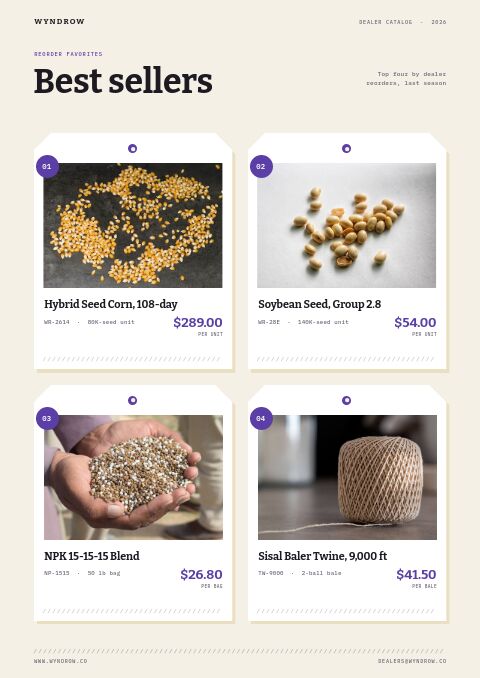


All 27 pages: 7 covers and 20 designed pages
Choose one cover and any of the designed pages — they share one look, so the catalog stays consistent however many you use. Every word, color and photo is editable.
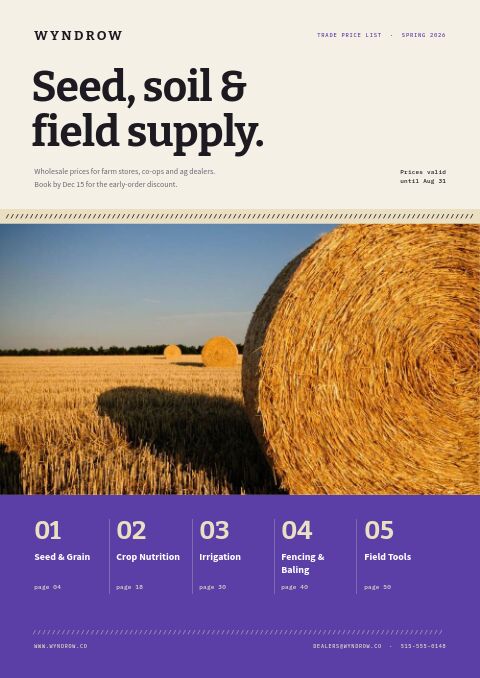
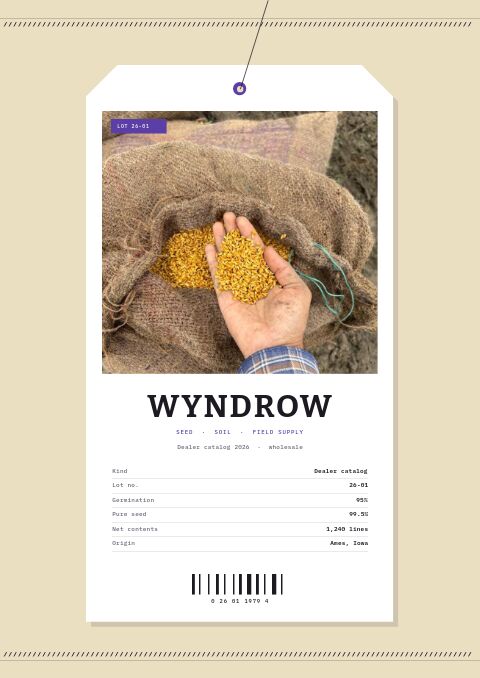



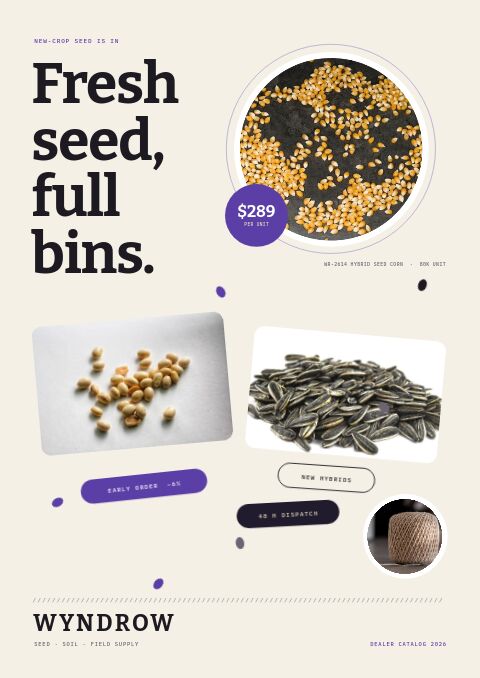











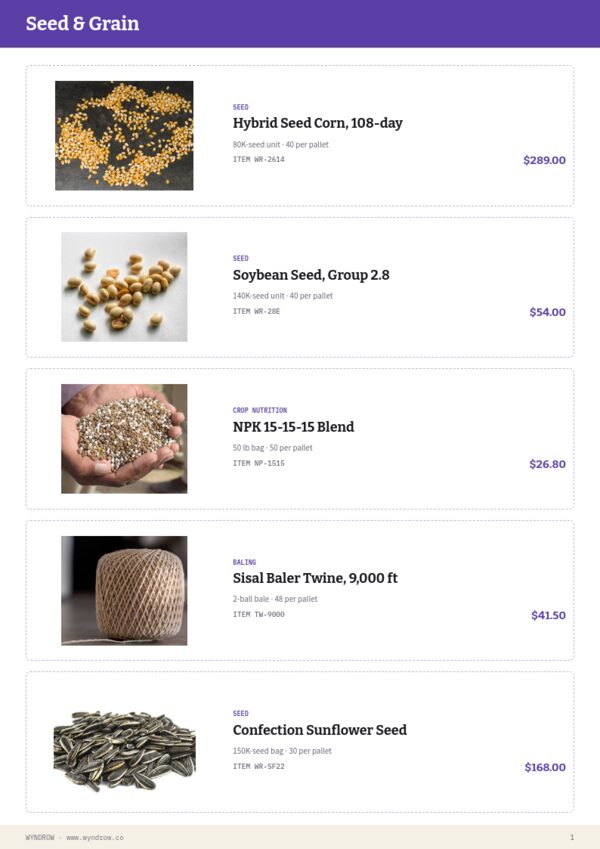
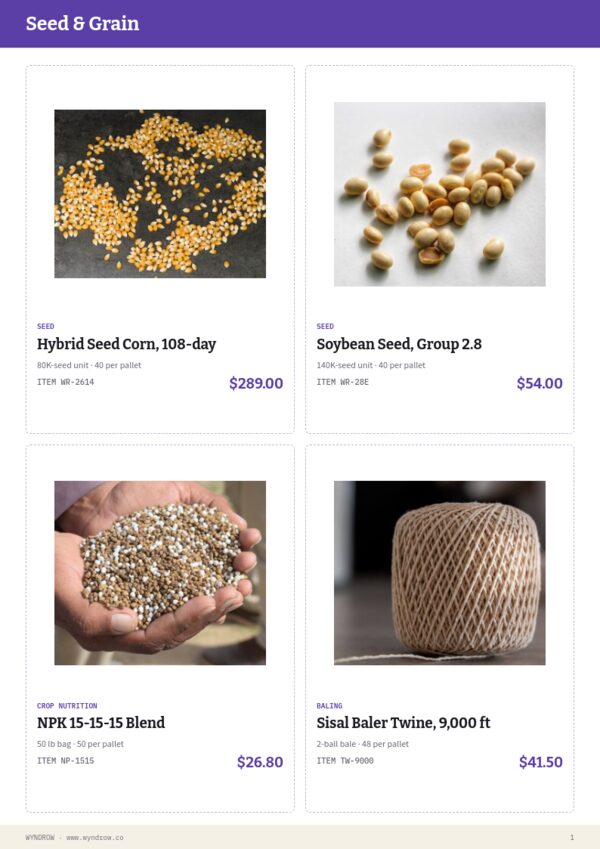
Product pages that fill themselves
Import your products and they take this layout automatically — shown here with sample products. Switch the grid any time, from 2 × 2 to 4 × 5 or a one-column line sheet.
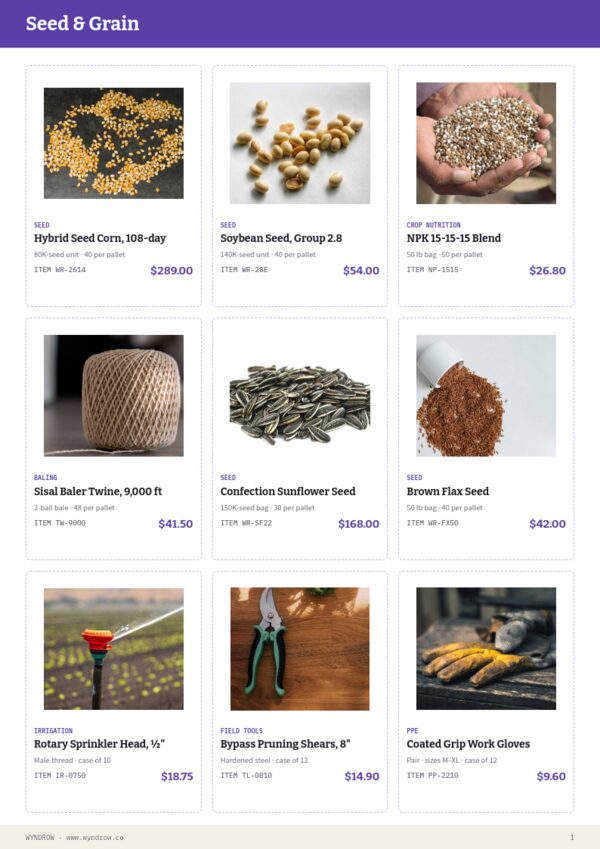
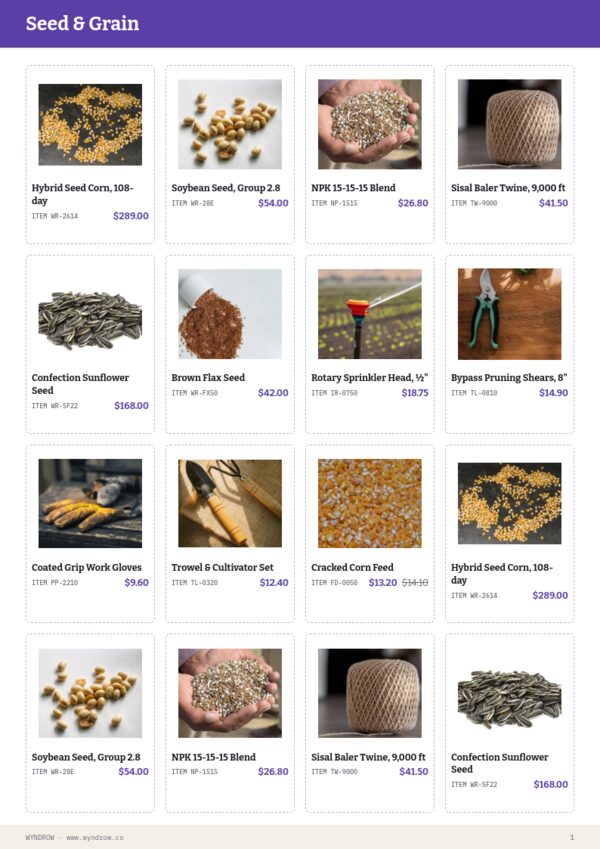
About the Agricultural Supplies Premium template
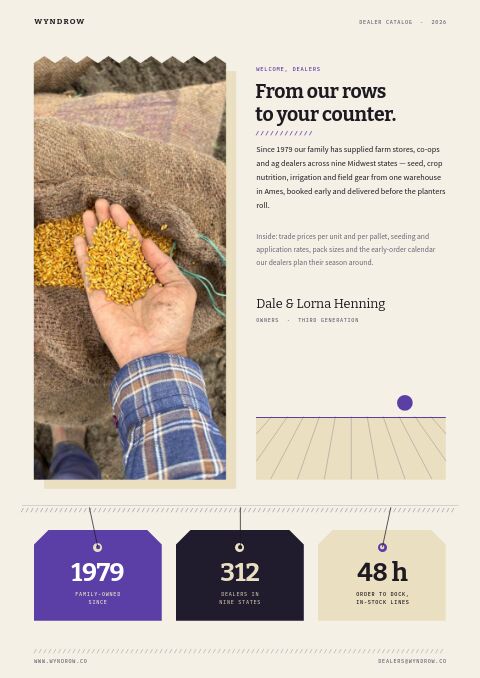
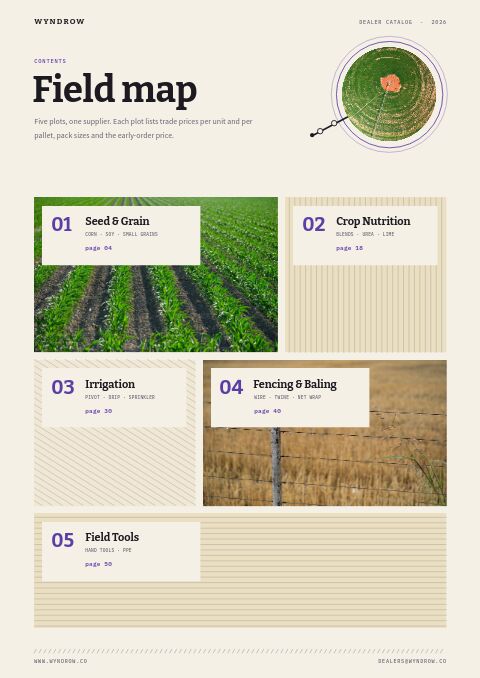
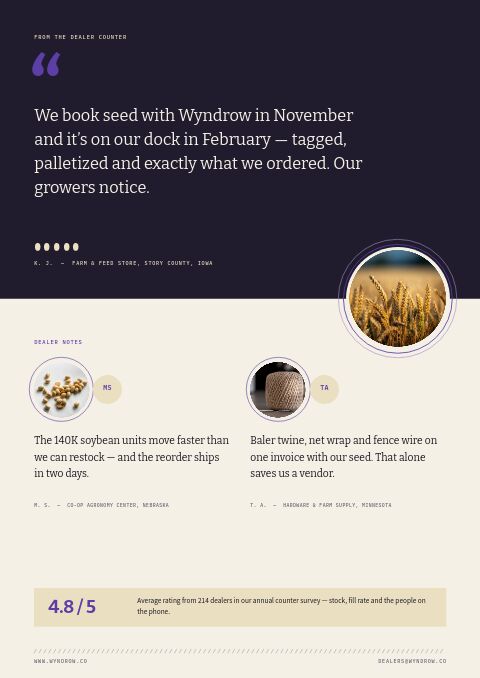
Seed-bag details run through this farm supply catalog template: tag-shaped labels with lot number, germination and purity, circular photos of crop fields seen from above, and a fine field-row texture. A sand and cream palette with deep violet panels carries Bitter headlines, Source Sans Pro text and a typewriter-style monospace for figures. Seven covers open onto 20 pages, including a field-map contents page whose five plots mix crop photos with field-row textures.
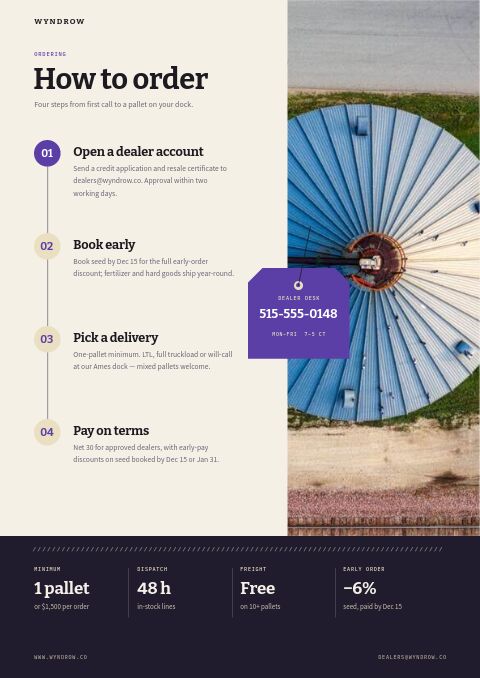
Dealers get what they need to book a season: trade prices per unit and per pallet, pack sizes, seeding and application rates, storage rules and the early-order calendar. Bring products in from Shopify or a CSV and they fill white product pages under colored section bands. Print it as a counter copy for farm stores, or send the wholesale flipbook with minimum quantities and order multiples matched to your pallet counts.
Best for
- Seed companies selling corn, soybean, small-grain and cover-crop seed to dealers
- Farm supply wholesalers serving farm stores, co-ops and ag retailers
- Fertilizer and crop nutrition distributors pricing by bag, tote and ton
- Irrigation, fencing and baling suppliers with seasonal price lists
- Early-order and prepay programs that need a clear booking calendar
Pages worth a closer look
Seeding and application rate tables
Two planning tables give seeding rates by crop and nutrient rates by product, followed by pack sizes from 40 lb bags to bulk totes and a worked formula: acres × rate ÷ seeds per unit. Dealers can turn a grower's acres into units at the counter.
Featured seed lot with agronomy ratings
A single variety gets the full seed-tag treatment (germination, purity, inert matter, weed seed), price per bag and bags per pallet, rating bars for traits such as winter hardiness and straw strength, and the early-order price in its own panel.
Early-order program page
Young corn rows fill the top half, and a purple discount badge overlaps the dark panel below, which holds a three-step timeline: book and pay by one date for the full discount, a smaller discount by the next, standard terms after that. Change the dates and percentages to match your own program.
Seed storage and handling rules
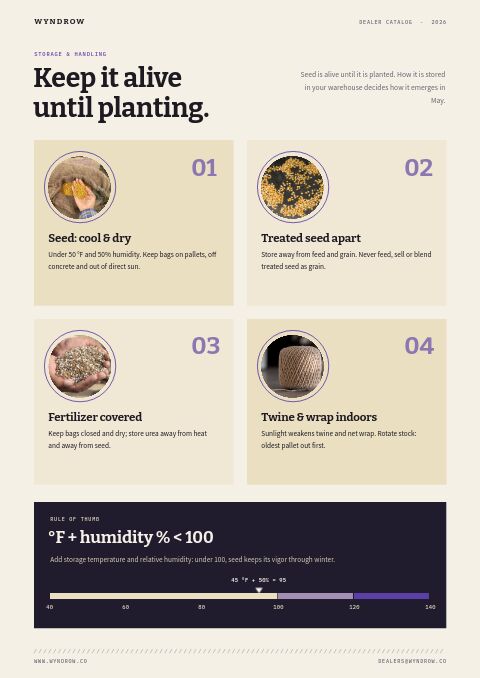
Four photo cards cover keeping seed cool and dry, storing treated seed away from feed and grain, keeping fertilizer covered and twine indoors, plus the temperature-plus-humidity rule of thumb dealers can post in the warehouse.
Season-at-a-glance shipping calendar
Four headline figures sit above a month-by-month chart showing when booking opens and when seed, nutrition, irrigation and fencing products ship. Replace the sample numbers with your own and buyers can plan deliveries around planting.
What ag dealers look for in a farm supply catalog
Print the numbers from the seed tag
Dealers and growers judge seed by its tag: variety or hybrid, lot number, germination, pure seed, inert matter, weed seed and test date. Show them on every seed listing. Add relative maturity in days for corn hybrids and the maturity group for soybeans, so buyers can match seed to their latitude and planting window.
Sell in the units growers plant
Seed corn usually sells in 80,000-kernel units and soybeans in 140,000-seed units, while small grains and forage seed come in 50 lb bags. Pair each pack with a seeding rate and acres per unit. A grower planting 400 acres of corn at 34,000 seeds an acre needs 170 units, and your catalog should make that sum easy.
Put early-order deadlines up front
Seed is booked months before planting, often between harvest and midwinter, with prepay discounts that step down at each deadline. Print the dates and percentages on the cover or promo page rather than burying them in the terms. Dealers plan cash flow around these dates and need to see them first.
Quote freight by the pallet
Farm stores order by the pallet and like to mix seed, fertilizer and hard goods to reach a freight break. List bags per pallet, pallet weight and your freight tiers, and say plainly whether mixed pallets count toward minimums. Setting order multiples to bags per pallet in the flipbook keeps orders in full pallets.
Handle treated seed with care
Seed with a fungicide or insecticide treatment must be labeled as treated, stored away from feed and grain, and never sold for food or feed. Mark treated lines clearly, state your return policy for treated and untreated seed, and include storage guidance that protects germination until planting: cool, dry and off the floor.
From product list to finished catalog
Pick this template
Open Agricultural Supplies Premium in EasyCatalog and choose the cover and the pages you want — every page is optional and editable.
Add your products
Import from Shopify in one click, or upload a CSV, connect WooCommerce or a product feed. Your products fill the product pages automatically.
Download or share
Export a print-ready PDF (up to 300 DPI, CMYK and bleed for print shops) or share an online flipbook with a built-in order form.
Questions about this template
Can I change the rates and pack sizes in the planning guide?
Every figure on the spec page is editable text, and the sample rates are only starting points for the Corn Belt. Type in your own crops, seeding rates, nutrient rates, pack sizes and acres per pack, or retitle the page as a dosage or coverage guide for other product lines. Fonts, colors and photos change the same way as on every other page.
How do dealers place orders from the farm supply catalog?
Share it as a wholesale flipbook and dealers order through the built-in form. Set a minimum order value, minimum quantities and order multiples, for example 40 bags to a pallet, and up to three volume price tiers. Each order lands in your inbox and in the app. Selling through Shopify B2B? The Unlimited plan imports your B2B catalogs with their price lists.
When should a seed company send its dealer catalog?
Before or during fall harvest, when dealers start booking for the next season and early-order discounts are at their deepest. A midwinter update can catch late bookings and fertilizer orders. Spring changes are usually about availability rather than new programs, so a short flipbook edition often does the job better than a reprint.
What is the 'temperature plus humidity under 100' rule for storing seed?
It is a long-standing rule of thumb for seed warehouses: when the storage temperature in °F plus the relative humidity in percent stays below 100, seed holds its germination well through the season. Keeping bags under 50 °F and 50% humidity stays inside the rule. Store on pallets, off concrete, out of sunlight and away from heaters.
More templates like this


Start your Agricultural Supplies catalog
Pick this template, add your products and download a print-ready PDF or share an online flipbook. Free plan available, no card needed.