From one product spec sheet template to a full technical catalog
A blueprint-blue technical edition for manufacturers whose buyers specify by the millimeter: dimension callouts, lamp data, finishes, weights and revision numbers, plus trade pricing. Its sample pages describe an invented lighting maker.
Free plan available — all templates are included on every plan. Already have an account? Open it in Templates.


All 18 designed pages
Covers, promotion and product-story pages built for this campaign. Use the ones you need; your product pages are added in the same style.


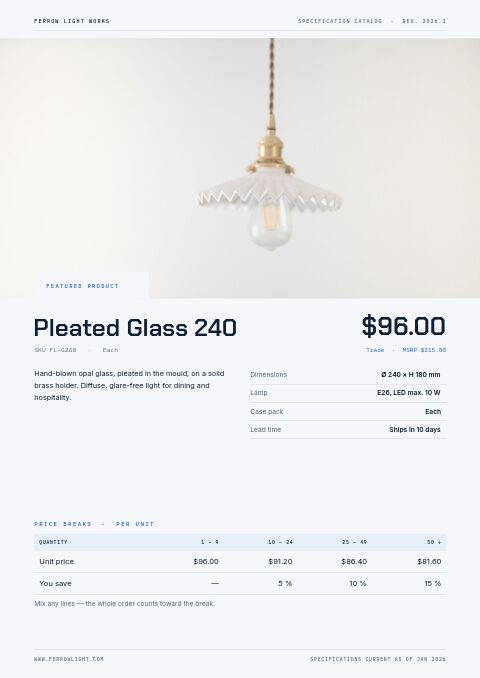


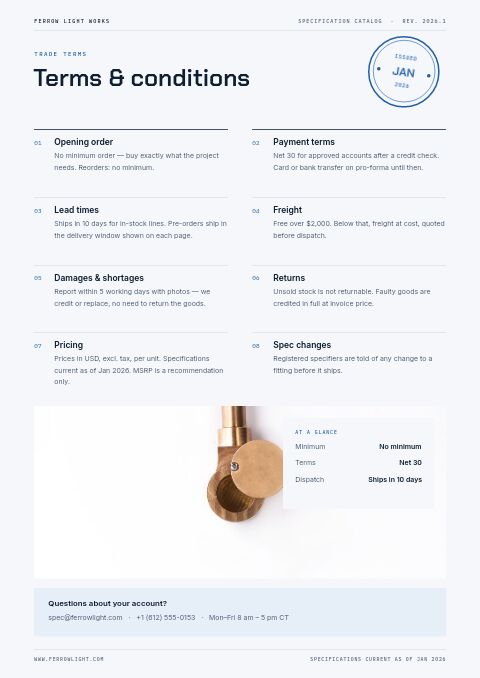




Product pages that fill themselves
Import your products and they take this layout automatically — shown here with sample products. Switch the grid any time, from 2 × 2 to 4 × 5 or a one-column line sheet.

About the Product Specification Catalog template
Drafting-table details define this product spec sheet template. The cover sets a black-and-white pendant photo on a blueprint grid, with dimension lines for height and diameter, numbered callouts for shade, collar and lamp, and a data row for model, finish, lamp, protection rating and weight. Chakra Petch headlines, Inter text and monospaced figures keep it precise, and a revision and sheet number mark it as a controlled document rather than a brochure.
Architects, contractors and lighting shops get one reference for everything you make. Import from Shopify with metafields such as dimensions, wattage or weight, or from a CSV, and each product prints with its SKU, name and trade price on white grid pages; add the barcode field if buyers scan stock. Raise the revision number with each new edition, export a 300 DPI PDF with crop marks and bleed for print, and send a flipbook link to trade buyers who want to order directly.
Best for
- Lighting, fixture and hardware makers selling to specifiers
- Manufacturers publishing a yearly technical edition with revisions
- Brands supplying contractors through electrical or plumbing wholesalers
- Product lines where dimensions, weights and ratings drive the choice
- Technical sales teams answering architects' specification requests
Pages worth a closer look
A spec sheet as the cover
The cover is a working specification for one product: a photo with height and diameter dimension lines, three numbered component callouts and a data row with model, finish, lamp, protection rating and weight, marked with a revision and sheet number.
Dimensions and lamp data table
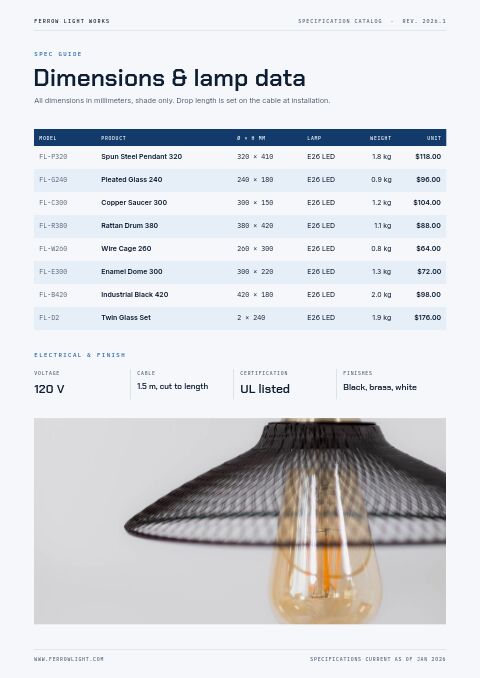
A full-width table lists each model's diameter and height in millimeters, lamp type, weight and unit price, with a note on how dimensions are measured and what is set at installation. Specifiers can compare a whole family of fittings in one view.
Finishes and materials page
Three numbered photos, a steel pendant, a brass wall fitting and a pleated glass shade, sit above short notes on each finish: brushed steel lacquered against fingerprints, unlacquered brass that patinates and hand-blown opal glass. A fourth note covers custom colors on request.
Samples for specifiers
Rather than a sale, the promo page offers free finish samples to registered specifiers, sample fittings at half trade price credited on order and mock-up installs for larger projects. It reflects how technical products are actually chosen.
What to include on a product specification sheet
Dimensions with a drawing
Give overall dimensions in one unit system, show them on a simple drawing or photo with dimension lines, and say what is measured, such as shade only or including the canopy. Adjustable parts, like a cable drop, need a range and a note on how they are set.
Electrical and performance data
For lighting, list lamp base, maximum wattage, color temperature, light output and dimming compatibility. For other products, give the equivalent performance figures. Mark which values are tested and which are nominal, so an engineer knows what to rely on.
Materials, finishes and protection
Name each material and finish, how it is applied and how it ages, plus any ingress protection or outdoor rating. Specifiers often have to justify their choices to clients, and precise material names make that much easier.
Control revisions
Give the document a revision number and issue date, and change it whenever any figure changes. Note what was revised and where. Contractors may work from a printed copy months later, and the revision lets them check they have current data.
Explain every way to buy
Technical buyers order in different ways: directly, through a wholesaler or as part of a project. Explain each route, lead times, minimums and how project registration works, and name a technical contact who can answer installation questions.
From product list to finished catalog
Pick this template
Open Product Specification Catalog in EasyCatalog and choose the cover and the pages you want — every page is optional and editable.
Add your products
Import from Shopify in one click, or upload a CSV, connect WooCommerce or a product feed. Your products fill the product pages automatically.
Download or share
Export a print-ready PDF (up to 300 DPI, CMYK and bleed for print shops) or share an online flipbook with a built-in order form.
Questions about this template
Can product pages show technical data from Shopify metafields?
Yes. Product pages can include Shopify metafields alongside title, SKU, price, barcode and description, so values such as dimensions, wattage, weight or finish print with each product. Style the fields once and apply the layout to one product, a page or the whole catalog.
Is the Product Specification Catalog only for lighting?
No. The sample brand makes light fittings, but the structure suits any technical range, from furniture hardware and bathroom fittings to electrical components or tools. Rename the sections, swap the cover photo and callouts, and adjust table headings to your own data.
What is the difference between a spec sheet and a data sheet?
The terms overlap. A spec sheet usually describes what a product is, with dimensions, materials, finishes and options, for the people choosing it. A technical data sheet goes deeper into measured performance, such as electrical or thermal values, for engineers. Many manufacturers combine both on one page per product.
How often should a technical catalog be revised?
Many manufacturers issue a full revision once a year and publish interim changes as they happen, each with a new revision number. Any change to dimensions, ratings or compatibility should trigger an update, because specifiers copy those figures into drawings and tender documents.





Start your Product Specification Catalog
Pick this template, add your products and download a print-ready PDF or share an online flipbook. Free plan available, no card needed.