Performance parts catalog template in a workshop-drawing style
A complete art-directed catalog for performance parts and workshop tool sellers: seven covers, twenty designed pages and product layouts, built on real garage photography and technical-drawing details.
Free plan available — all templates are included on every plan. Already have an account? Open it in Templates.



All 27 pages: 7 covers and 20 designed pages
Choose one cover and any of the designed pages — they share one look, so the catalog stays consistent however many you use. Every word, color and photo is editable.









Product pages that fill themselves
Import your products and they take this layout automatically — shown here with sample products. Switch the grid any time, from 2 × 2 to 4 × 5 or a one-column line sheet.


About the Automotive & Parts template
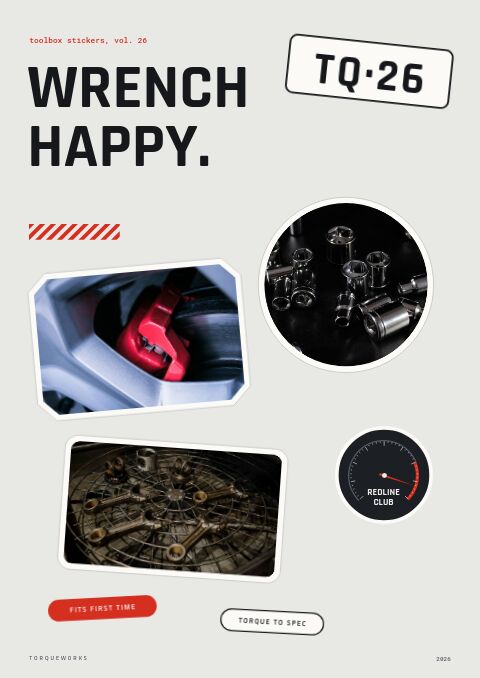
This performance parts catalog template looks like it came off a workshop wall. One cover borrows from an engineering drawing, with grid reference letters, a scale note and tolerance callouts; others use a tachometer, hazard stripes or a sheet of toolbox stickers. Rajdhani headlines, Titillium Web text and Roboto Mono part numbers sit on concrete-gray pages with near-black panels and a signal-red accent. Seven cover designs, twenty designed pages and designed product and mosaic layouts are included.
Sample copy for a fictional parts specialist covers what enthusiasts and garages ask: a parts index by system with part number ranges, fitment checks by VIN, trade terms, warranty and a seven-day tool sale. Add your products from Shopify or a CSV and they flow onto designed product pages with SKU, price and a compare-at price for sale items. Share a retail flipbook that checks out at Shopify, or a wholesale flipbook for trade accounts.
Best for
- Performance and tuning shops selling turbos, brake kits and engine internals
- Aftermarket brands launching a new parts range with a bold printed catalog
- Workshop tool sellers running sale catalogs for sockets, ratchets and torque wrenches
- Engine builders and race prep specialists sharing specs with customers
- Parts retailers who sell to both enthusiasts and trade garages
Pages worth a closer look
Parts index by system
Five systems each get a part number range and a page: engine internals, forced induction, valvetrain, brakes and chassis, and workshop tools. Buyers who know the part they need can jump straight to it, and your numbering logic stays visible.
Big brake kit spec page
The featured product page pairs a large photo with dimension callouts and a spec block for pistons, disc size, weight per corner and fitment. Any high-value kit gains from this treatment, because performance buyers compare numbers before they buy.
Tire sidewall and wheel-nut torque guide
A spec guide decodes a tire size marking (width, profile, construction, rim, load and speed index), with tables for load and speed ratings and wheel-nut torque by thread. Reference pages like this give customers a reason to keep the catalog.
Service interval chart
A grid of parts against distance intervals (oil and filter, air filter, brake fluid, spark plugs, coolant, timing belt) shows when each item is due. Severe-use notes and a workshop tip make it useful to drivers and technicians alike.
How to plan a performance parts catalog buyers keep
Organize by system and part number range
Enthusiasts browse by system (engine, induction, valvetrain, brakes, chassis), while trade buyers search by part number. Give each system its own section with a number range, and print the part number on every product so both kinds of buyer find what they need quickly.
Publish the numbers people compare
Performance buyers want data: turbo flange type and flow, cam duration and lift, brake disc diameter, piston count and minimum wheel size, spring rates. Put the same spec fields on every product in a consistent order, and add dyno or test results only where you can back them up.
Be clear about fitment and road use
State which models, engine codes and years a part fits, what else the job needs (gaskets, oil lines, a tune) and whether the part is meant for road or track use. Clear notes reduce returns and keep customers from fitting parts that are not legal on public roads where they live.
Show sale pricing honestly
When you discount, show the regular price next to the sale price, as the sample does on turbos and connecting rods, and give an end date. EasyCatalog's compare-at and discount price fields can print both on product pages, and a dated promo page keeps the urgency real.
Add reference pages people come back to
Torque specs, service intervals, tire size decoding and fitting tips turn a sales catalog into a workshop reference. Keep them near the back where they are easy to find, and put your contact details on the same spread so the next order is one call away.
From product list to finished catalog
Pick this template
Open Automotive & Parts in EasyCatalog and choose the cover and the pages you want — every page is optional and editable.
Add your products
Import from Shopify in one click, or upload a CSV, connect WooCommerce or a product feed. Your products fill the product pages automatically.
Download or share
Export a print-ready PDF (up to 300 DPI, CMYK and bleed for print shops) or share an online flipbook with a built-in order form.
Questions about this template
What is included in the automotive design kit?
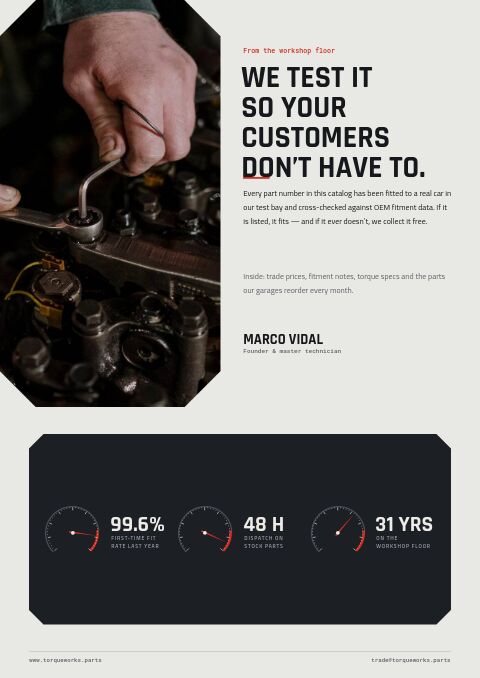
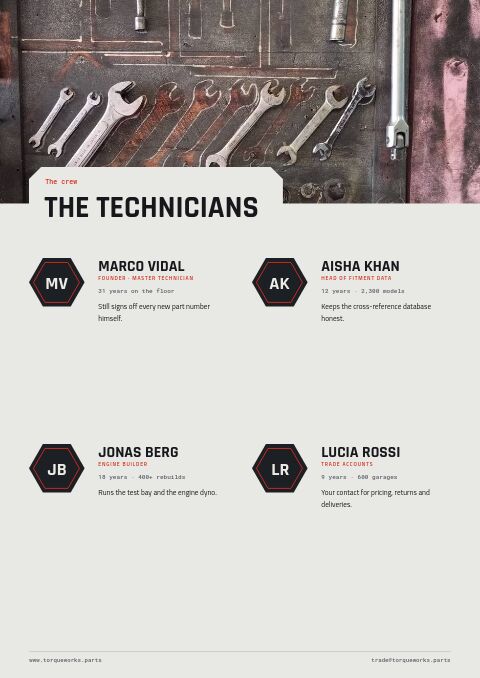
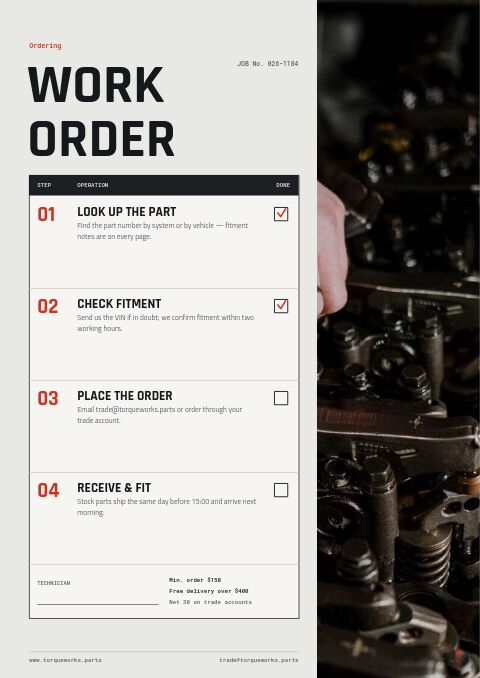
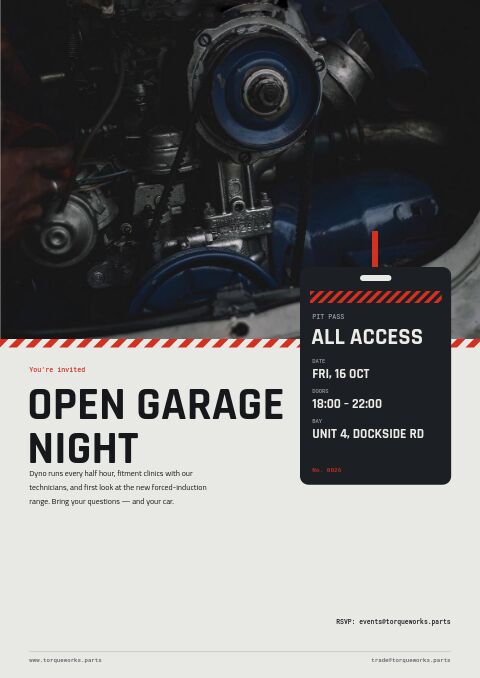
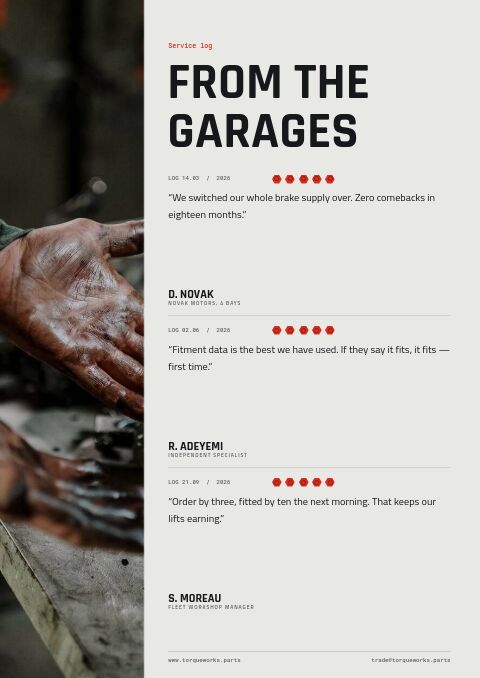
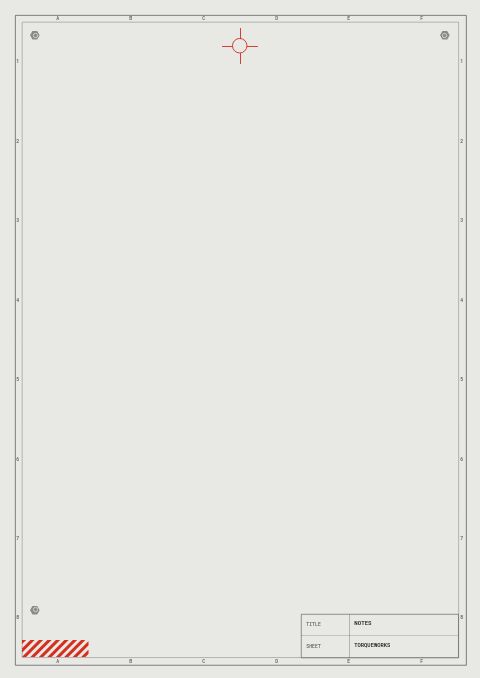
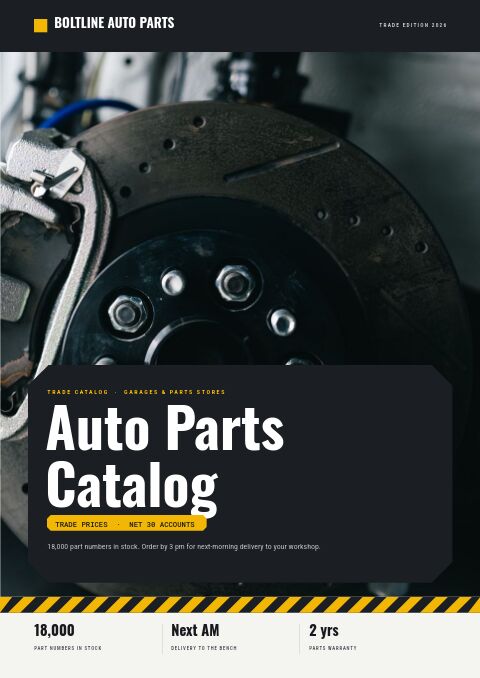
Seven cover designs (drawing sheet, tachometer, band, poster, split, magazine and sticker), twenty designed pages including welcome, parts index, divider, workshop lookbook, featured kit, story, technicians, how to order, top sellers, sale, stats, open garage night, testimonials, FAQ, spec guide, service intervals, contact, terms, a notes sheet and back cover, plus designed product and mosaic layouts.
Can I use this performance parts template for retail and trade customers?
Yes. Share it as a retail flipbook that checks out at Shopify for enthusiasts, or as a wholesale flipbook with an order form for garages, with trade rules such as a minimum order value, quantity limits and volume tiers. Every link gets its own QR code and can be protected with a password.
What should a car parts catalog include for each product?
A part number, a clear photo, the vehicles or engine codes it fits, key specifications, what comes in the box, price and warranty. For performance parts, add installation notes and whether tuning or extra parts are required. Barcodes or QR codes on product pages help counter staff and customers look items up quickly.
How do I make an auto parts catalog easy to use in the workshop?
Print it in a sturdy format such as A4 or Letter, keep the part number index at the front and reference tables at the back, and use high-contrast type that reads under shop lighting. A QR code on the cover can open the online flipbook, so technicians can check the latest version from their phones.


Start your Automotive & Parts catalog
Pick this template, add your products and download a print-ready PDF or share an online flipbook. Free plan available, no card needed.