An auto parts wholesale catalog built around part numbers
A black-and-yellow trade catalog for parts suppliers serving garages, parts stores and fleet workshops. Part numbers lead the product pages, with a brake fitment guide, core charges, trade prices and next-morning delivery terms.
Free plan available — all templates are included on every plan. Already have an account? Open it in Templates.

All 17 designed pages
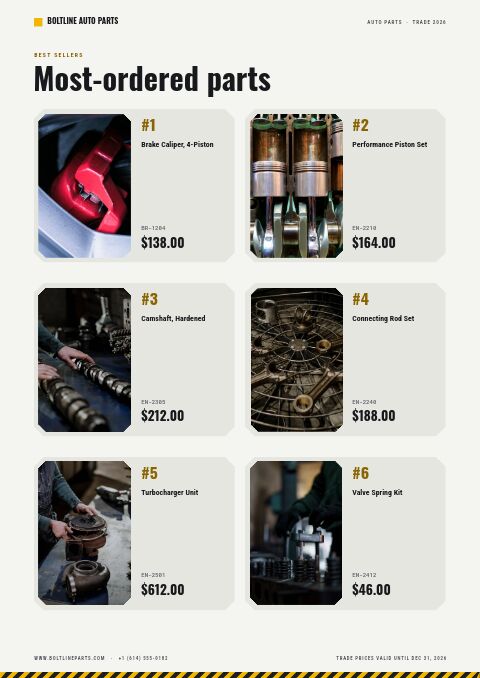
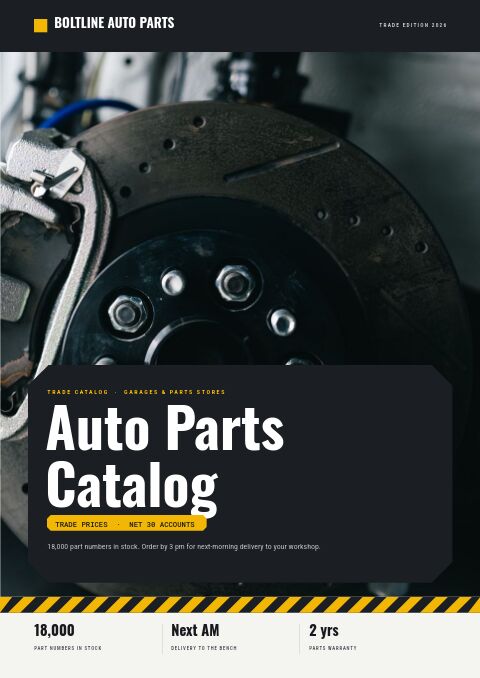
Covers, promotion and product-story pages built for this campaign. Use the ones you need; your product pages are added in the same style.
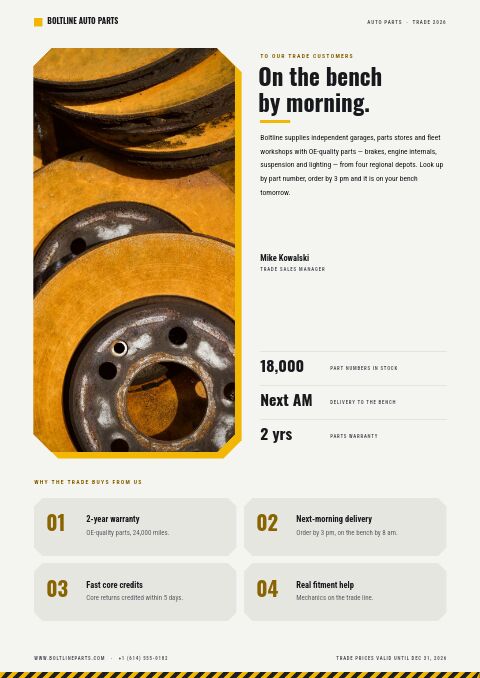
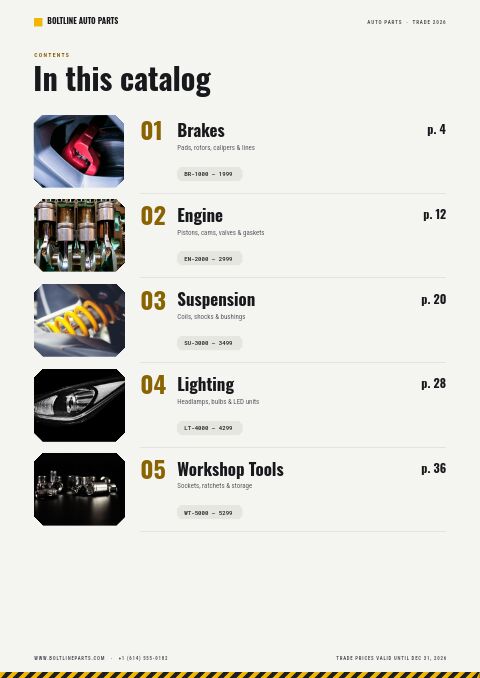


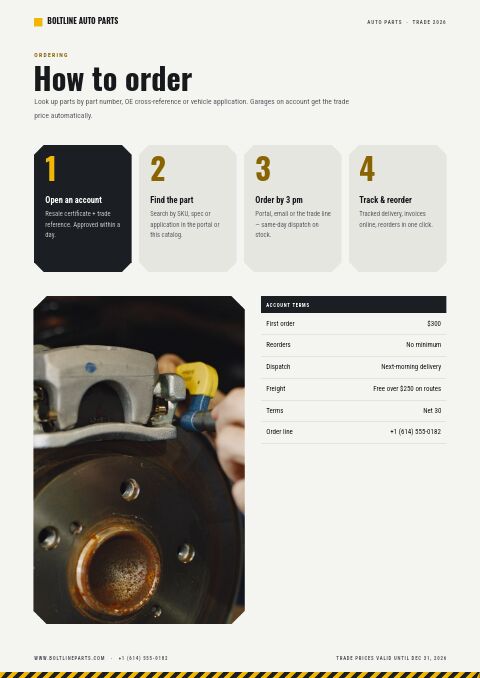

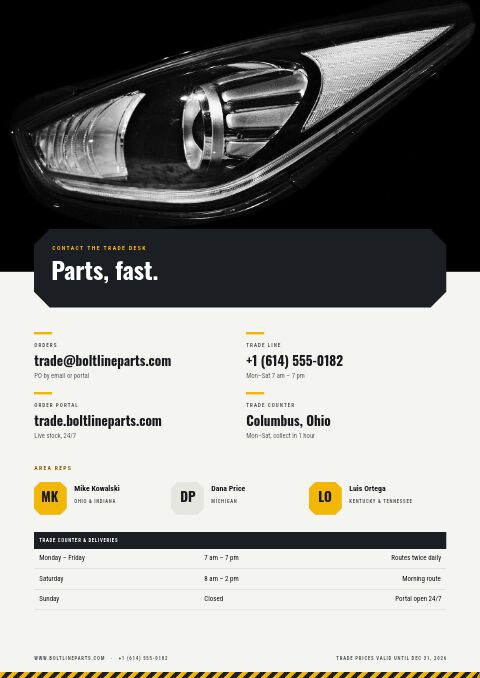




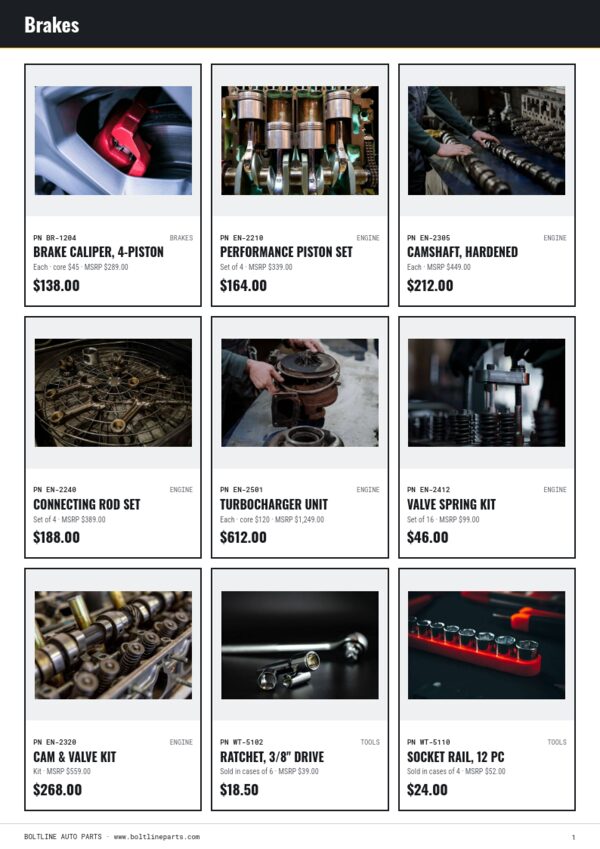
Product pages that fill themselves
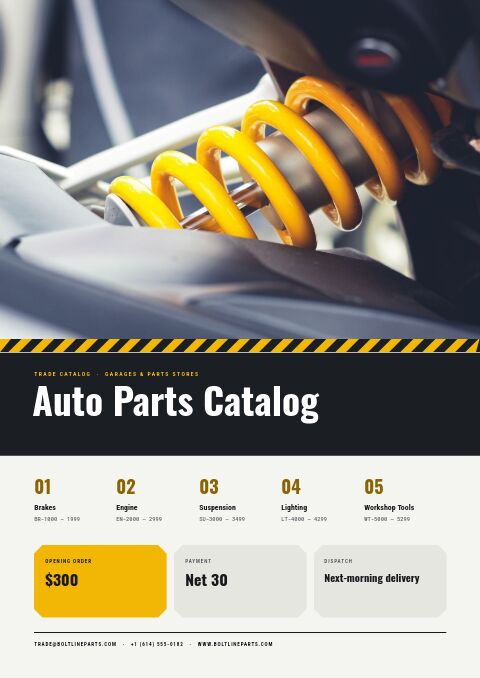
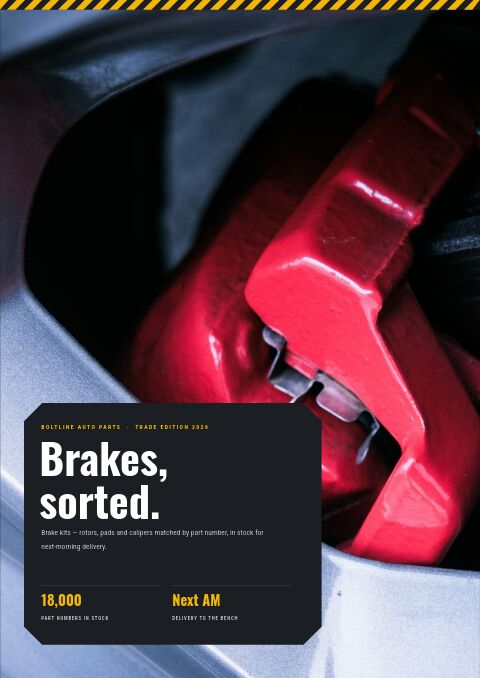
Import your products and they take this layout automatically — shown here with sample products. Switch the grid any time, from 2 × 2 to 4 × 5 or a one-column line sheet.
About the Automotive Parts Catalog template
Workshop yellow, near-black panels and a hazard-stripe band set the tone for this auto parts wholesale catalog. The cover crops tight on a drilled brake disc and caliper, overlaid with the title in tall condensed Oswald type, a yellow tag for trade prices and Net 30 accounts, and three figures beneath the stripe. Roboto Condensed and Roboto Mono keep part numbers, specs and prices dense but legible, and every section has its own part-number range.
It is made for suppliers whose customers look parts up by number and need them on the bench fast. Import products from Shopify, where metafields can carry fitment or core charges, or upload a CSV, and they fill white grid pages with part number, type tag and trade price. Share a password-protected wholesale flipbook with an order form for garages on account, and print a PDF for the trade counter and for area reps.
Best for
- Parts distributors and wholesalers supplying independent garages
- Brake, engine and suspension specialists with large part-number ranges
- Parts stores offering trade accounts on Net 30 terms
- Remanufacturers who charge and refund core deposits
- Area reps and trade counters handing out a printed parts catalog
Pages worth a closer look
Brake fitment guide by vehicle class
A fitment table matches six vehicle classes and their model years to rotor size, pad part number and caliper part number, with a note to confirm each part against OE cross-references. It speeds up the most frequent brake lookups at the counter.
Featured part with specs and core charge
One part leads with its part number, a note on how it was remanufactured, trade price against MSRP, unit, core charge and a specification table for pistons, material and the rotor it fits. Copy the format for any high-value part.
Workshop stock-up offer
A promotion gives garages an extra discount on brake orders above a set value, mixing pads, rotors, calipers and lines, with an end date and code. Brake jobs are frequent and predictable, which makes brakes a natural category for a stock-up deal.
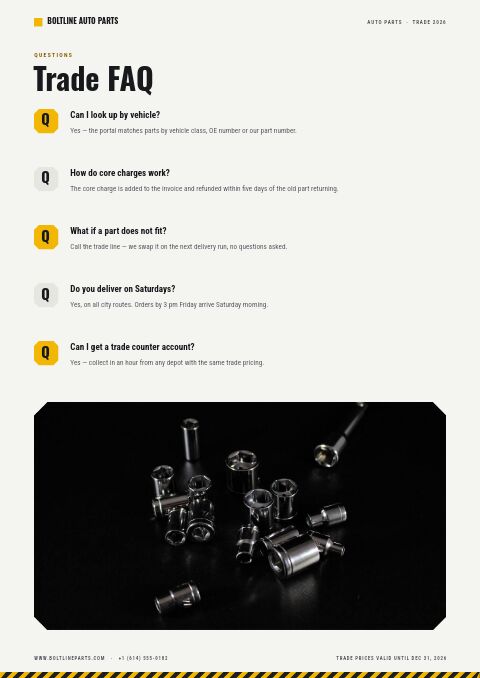
Trade FAQ for workshop questions
Questions cover vehicle lookup, how core charges are invoiced and refunded, what happens if a part does not fit and Saturday deliveries. Edit the answers to your own policies; they are the questions a trade counter hears every day.
What garages look for in an auto parts catalog
Lead with part numbers and cross-references
Mechanics search by part number or by the original equipment number stamped on the old part. Print your part number prominently, list OE cross-references where you can, and note superseded numbers so an old reference still finds the right part.
Show fitment clearly
List the vehicle applications for each part by make, model, years and engine or trim, or group parts by vehicle class as a quick guide. Add key dimensions, such as rotor diameter and thickness, so a technician can confirm the fit with a tape measure.
Explain core charges
For remanufactured parts like calipers, alternators or starters, explain the core deposit, the condition the returned core must be in and how quickly the refund is credited. Clear core terms prevent disputes on the next invoice.
Publish delivery runs and cut-offs
Garages promise customers a finish time. Print order cut-offs for same-day and next-morning delivery, the days you run and whether parts can be collected from a trade counter. Speed often decides which supplier gets the call.
Make returns simple
Wrong parts happen. State how a part that does not fit is swapped, whether a restocking fee applies to correct parts returned unused, and the time limit for returns. Mechanics stay loyal to suppliers who make returns painless.
From product list to finished catalog
Pick this template
Open Automotive Parts Catalog in EasyCatalog and choose the cover and the pages you want — every page is optional and editable.
Add your products
Import from Shopify in one click, or upload a CSV, connect WooCommerce or a product feed. Your products fill the product pages automatically.
Download or share
Export a print-ready PDF (up to 300 DPI, CMYK and bleed for print shops) or share an online flipbook with a built-in order form.
Questions about this template
Can I list fitment data and core charges on product pages?
Yes. Keep fitment details, cross-references or core charges in Shopify metafields and they can print with each product, alongside part number, trade price, barcode and description. Without Shopify, put the same details in your CSV's description column or enter them by hand.
What pages are in the Auto Parts Catalog template?
Seventeen pages in a black, yellow and white trade style: three covers, a welcome letter, contents, a section divider, a featured part, most-ordered parts, a stock-up promotion, how to order, trade terms, a trade desk contact page, notes, a brake fitment guide, key figures, a trade FAQ and a back cover.
What is a core charge on auto parts?
A core charge is a deposit added to the price of a remanufactured part, such as a caliper or alternator. It is refunded when the old part, the core, comes back in rebuildable condition. Suppliers use it to secure cores for remanufacturing.
How should an auto parts catalog be organized?
Most parts catalogs group products by vehicle system, such as brakes, engine, suspension, electrical and lighting, then by part type, with part-number ranges for each section. A fitment index by vehicle and a numeric index by part number help both mechanics and counter staff find a part quickly.




Start your Automotive Parts Catalog
Pick this template, add your products and download a print-ready PDF or share an online flipbook. Free plan available, no card needed.