Brewery catalog template for craft beer sold to bars and bottle shops
A 27-page trade catalog with real brewhouse and bar photography for independent breweries selling kegs, casks and cans to pubs, bars, bottle shops and distributors.
Free plan available — all templates are included on every plan. Already have an account? Open it in Templates.


All 27 pages: 7 covers and 20 designed pages
Choose one cover and any of the designed pages — they share one look, so the catalog stays consistent however many you use. Every word, color and photo is editable.








Product pages that fill themselves
Import your products and they take this layout automatically — shown here with sample products. Switch the grid any time, from 2 × 2 to 4 × 5 or a one-column line sheet.


About the Brewery & Craft Beer template
This brewery catalog template is loud in the right places: serrated bottle-cap badges carry prices and ABV, condensed Fjalla One headlines read like a taproom board, and Anonymous Pro adds a typewriter tone to specs. Copper-orange accents sit on cream pages and deep bottle-green panels. Seven covers, including a tap-pour cover and a keg-issue magazine cover, lead into 20 designed pages, designed product pages and mosaic layouts.
Bars need to know what each beer is, how it ships and what it costs before they give it a tap line. The style guide, keg and case prices and line-care page cover that, and your products flow onto the product pages from Shopify or a CSV, each card with SKU, name, a style-and-pack line and price; formats can also be grouped as variants. Print sell sheets for reps, or send the wholesale flipbook so accounts reorder online.
Best for
- Independent breweries selling kegs, casks and cans to bars and pubs
- Quarterly or seasonal brewery trade price lists
- Beer distributors presenting a brewery's range to new accounts
- Seasonal and limited releases announced to existing stockists
- Brewery reps who need printed sell sheets with a QR code to reorder
Pages worth a closer look
Style guide with an SRM color scale
A color bar runs from pale straw to black, then one row per beer gives style, ABV, IBU, color, serving temperature and glass. A formats table lists keg, cask and can-case sizes, pints per container and pallet counts, so bar staff can describe each beer before a customer asks.
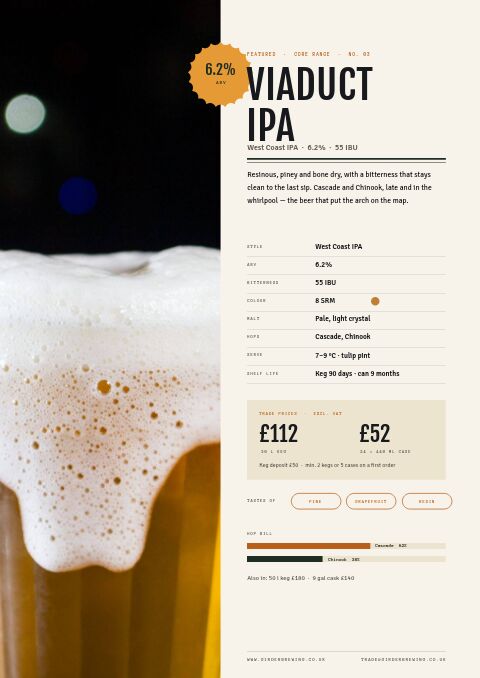
Featured beer page that works as a sell sheet
One beer with a bottle-cap ABV badge, tasting description, style, bitterness, color, malt, hops, serve and shelf life, followed by keg and case trade prices and a hop-bill bar. Reps can hand it over as a one-page sell sheet.
Cellar and line-care page
Four photo steps (store cold, clean lines weekly, pour at 45°, mind the date) plus a callout for weekly line cleaning. Poorly kept lines can make a good beer taste wrong, so helping accounts pour well protects your beer's name.
Opening-order offer with a POS kit
A cap-shaped photo of a tap pour, a large opening-order discount, a promo code and a count of the free point-of-sale kit: branded glasses, tap badges and drip mats. Edit it for a new-account push or a seasonal launch.
Trade open day and launch invitation
Date, time and place blocks sit above a timed schedule of brewhouse tours, a first pour of the new seasonal, a cellar clinic and food. Use it to invite accounts to taste a release and book fall pricing in person.
What bars and bottle shops need from a brewery catalog
Lead with the specs that sell a beer
For every beer give style, ABV, IBU, color, a two-line flavor description and the recommended serve and glass. Bar managers build a tap list for balance, so they need to see at a glance whether your pale fills a gap or duplicates a line they already pour.
Spell out keg sizes and couplers
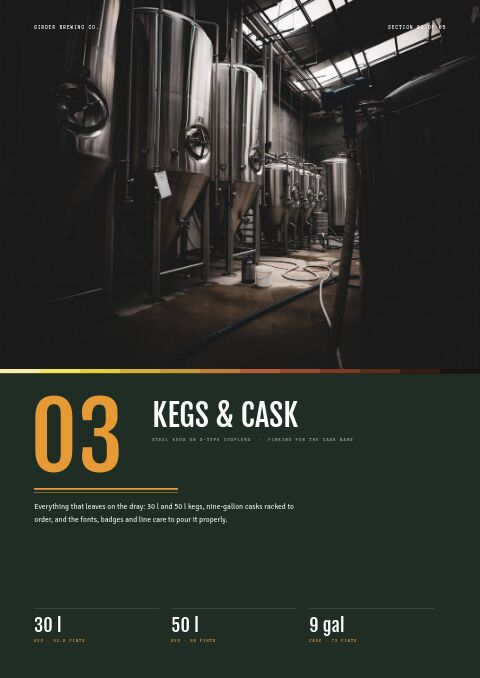
List each keg size and the coupler or fitting it uses, such as S-type or D-type, along with pints or servings per keg. A bar that cannot connect your keg cannot sell it. Give cask sizes for real-ale venues and case counts for cans and bottles going to shops.
Explain deposits and empties
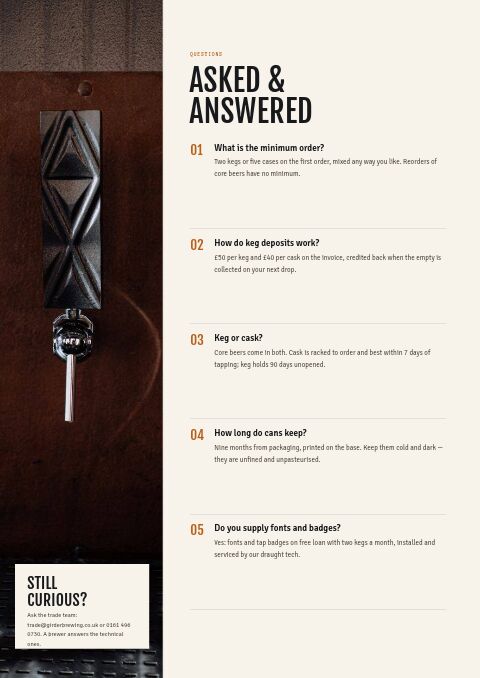
Most breweries charge a deposit on steel kegs and casks and credit it when the empties are collected. Print the deposit per container, how collections are booked and how long empties may stay on site. Clear deposit terms prevent disputed invoices, and lost kegs are a real cost for a small brewery.
Publish a seasonal release calendar
Tap rotations and shop shelves are planned weeks ahead. Show seasonals and specials with their availability windows, such as a fresh-hop pale in early fall or a winter porter from November. Buyers can then book a guest line or shelf space instead of hearing about the beer after it sells out.
Print freshness and storage advice
Hop-forward beers lose aroma within weeks, while stouts and lagers hold up longer. Give a packaged-on or use-by date for every format, storage temperatures for kegs and cans, and how often lines should be cleaned. Beer stored warm draws complaints, and those complaints land on your brand.
From product list to finished catalog
Pick this template
Open Brewery & Craft Beer in EasyCatalog and choose the cover and the pages you want — every page is optional and editable.
Add your products
Import from Shopify in one click, or upload a CSV, connect WooCommerce or a product feed. Your products fill the product pages automatically.
Download or share
Export a print-ready PDF (up to 300 DPI, CMYK and bleed for print shops) or share an online flipbook with a built-in order form.
Questions about this template
Can I list keg, cask and can prices for the same beer?
Add each format as a variant of one beer, for example a 30-liter keg, a 9-gallon cask and a case of 24 × 440 ml cans, and the product card can show a variant table with each price and SKU. In the wholesale flipbook, order multiples keep case orders in whole layers or pallets if you need that.
Can the brewery catalog template show prices excluding VAT?
It can: the Discount & Tax tool shows ex-VAT prices, applies percentage or fixed trade discounts and converts prices with a currency multiplier for export customers. Choose the catalog currency from 28 options. Deposits, duty notes and delivery charges belong on the trade terms page, which you can rewrite like any other page.
What is the difference between keg and cask beer?
Keg beer is carbonated at the brewery, sealed in a pressurized keg and pushed to the tap with gas, so a tapped keg keeps for weeks. Cask beer, often called real ale, finishes conditioning in the cask and is served by hand pump or gravity without added gas; once tapped it should be sold within a few days.
How often should beer lines be cleaned?
Every one to two weeks. UK cellar practice is weekly, and US draft-quality guidance sets 14 days as the maximum, using a line-cleaning solution followed by a thorough water rinse. Dirty lines cause off-flavors, haze and excess foam. A line-care page in your catalog reminds accounts that clean lines protect how your beer tastes.
More templates like this




Start your Brewery & Craft Beer catalog
Pick this template, add your products and download a print-ready PDF or share an online flipbook. Free plan available, no card needed.