Wine and spirits catalog template for merchants and importers
An art-directed wine list in burgundy and cream with real vineyard and cellar photography. Built for merchants, importers and shops presenting reds, whites, sparkling, spirits and library vintages to trade and private clients.
Free plan available — all templates are included on every plan. Already have an account? Open it in Templates.


All 27 pages: 7 covers and 20 designed pages
Choose one cover and any of the designed pages — they share one look, so the catalog stays consistent however many you use. Every word, color and photo is editable.







Product pages that fill themselves
Import your products and they take this layout automatically — shown here with sample products. Switch the grid any time, from 2 × 2 to 4 × 5 or a one-column line sheet.


About the Wine & Spirits template
Like a fine label, this wine and spirits catalog template dresses every page in deep burgundy and parchment, with a double gold rule around the cover and photos cut into bottle and arch shapes. Playfair Display headlines pair with Lato text and Cinzel capitals. Seven covers, from a bottle-window cover to a magazine-style journal, lead into 20 designed pages, product pages with framed cards, and mosaic layouts for featured bottles.
Each wine can carry vintage, region, grapes, bottle size, case price and a tasting note, while the serving guide and cellaring page answer what staff and customers ask most. Import your range from Shopify or a CSV and bottles flow onto the product pages in grids or line-sheet rows. Print the list in CMYK for tastings, or share a password-protected flipbook so trade prices stay with trade buyers.
Best for
- Wine merchants publishing a seasonal list for restaurants and private clients
- Importers and distributors presenting growers' wines to the trade
- Wine shops with a spirits shelf and a few rare bottles
- En primeur and allocation offers with reservation deadlines
- Wine club mailings, tasting evenings and holiday case offers
Pages worth a closer look
Tasting-note page for a hero wine
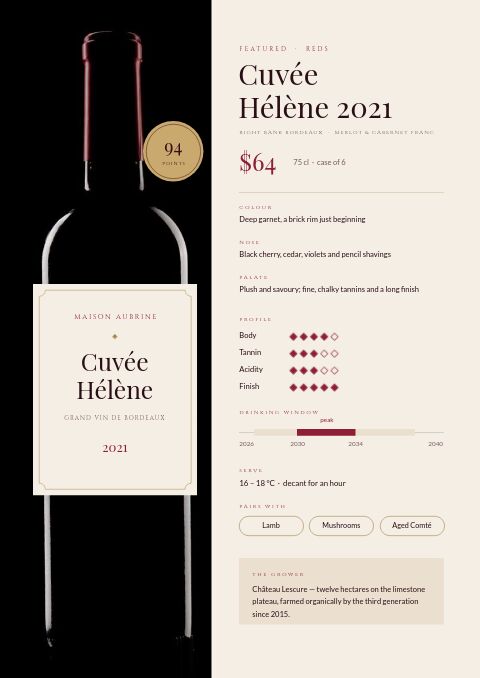
One bottle per page with color, nose and palate notes, diamond scales for body, tannin, acidity and finish, a drinking-window bar, serving advice and food pairing chips. It presents a wine the way a sommelier would describe it at the table.
Bottle sizes, serving temperatures and pairings
Bottle silhouettes from half bottle to Methuselah, a serving-temperature scale from sparkling to full reds, and a pairing chart that matches wine styles to dishes. Shop and restaurant staff can use it as a quick reference at the counter or table.
En primeur offer page
A burgundy offer page with a large discount, a reservation deadline and a promo code, beside an arched photo of a pour. Use it for futures, allocations or a holiday case offer, and change the terms in a few edits.
Cellaring and decanting guide
Four rules for laying wine down (temperature, humidity, darkness and bottle position) sit beside a barrel-cellar photo, with decanting times for young reds, mature reds, fine whites and sparkling. It answers the storage questions customers bring to the counter.
Most-requested bottles with score medallions
Four bottles appear in bottle-shaped photo windows, each with a score medallion, region, vintage and trade price. If you do not quote critics, swap the scores for your own staff ratings.
What every wine and spirits list should tell a buyer
Give every bottle the same core facts
Producer, wine name, region, grape or blend, vintage, bottle size and alcohol by volume belong on every listing, followed by price per bottle and per case. Buyers scan for these first. Keep tasting notes short and concrete, built on aromas and structure rather than adjectives, and add a drinking window for wines meant to age.
State vintage and allocation rules
Vintages sell out and change mid-season. Print a line saying the vintage may change and that you confirm before shipping, and explain how allocated wines are shared, for example by order date or account history. Trade buyers accept scarcity, but not a delivery with a different year than the one printed on their menu.
Cite scores with care
Critics' scores help sell wine, but only with the reviewer's name, the vintage scored and permission where required. If you cannot source a score, use your own staff ratings or a simple house scale. Never carry a score from one vintage over to the next; buyers notice, and it undermines the rest of the list.
Plan editions around the selling seasons
Restaurants and shops buy for the holidays in early fall, rosé and sparkling for spring and summer, and futures when a new vintage is offered. Publish a fall list in September with gift cases and a lighter spring edition, and use short flipbook offers between printed editions.
Respect alcohol marketing rules
Alcohol promotion is regulated almost everywhere. Add a responsible-drinking line, avoid health claims, and check local rules on price promotions and on showing trade prices to consumers. A password on the trade flipbook keeps wholesale pricing private, while a separate retail edition can show consumer prices.
From product list to finished catalog
Pick this template
Open Wine & Spirits in EasyCatalog and choose the cover and the pages you want — every page is optional and editable.
Add your products
Import from Shopify in one click, or upload a CSV, connect WooCommerce or a product feed. Your products fill the product pages automatically.
Download or share
Export a print-ready PDF (up to 300 DPI, CMYK and bleed for print shops) or share an online flipbook with a built-in order form.
Questions about this template
Which pages are included in this wine and spirits catalog design?
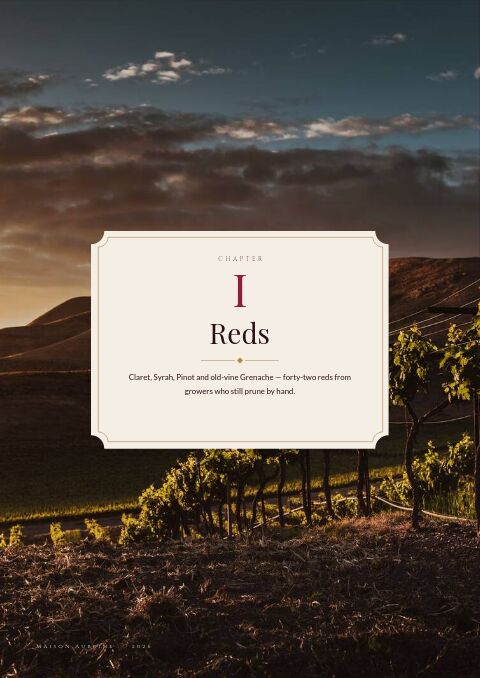
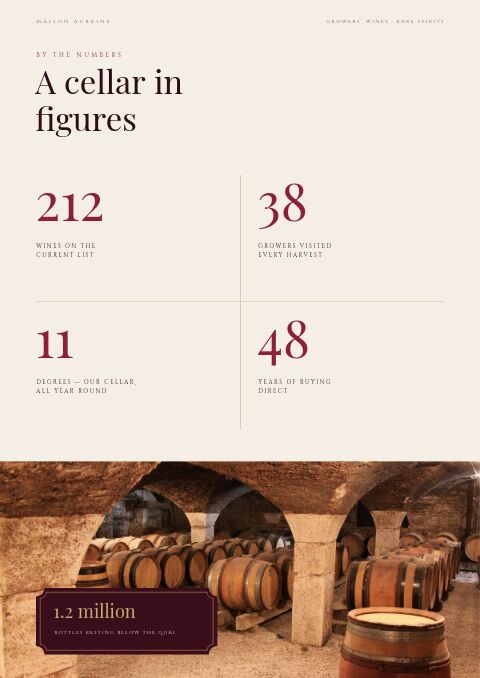
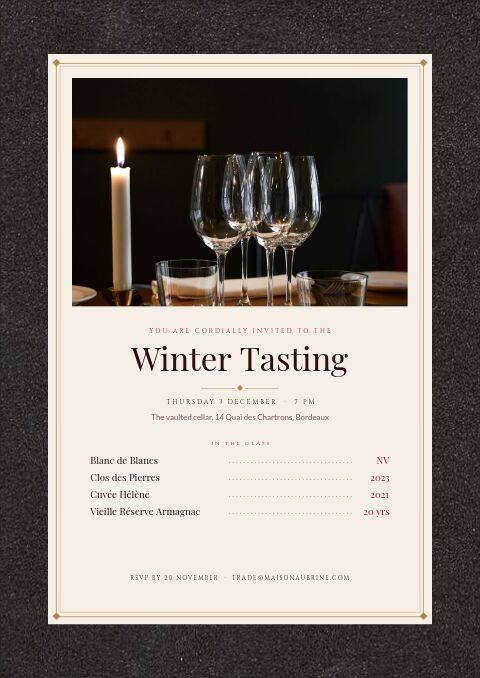
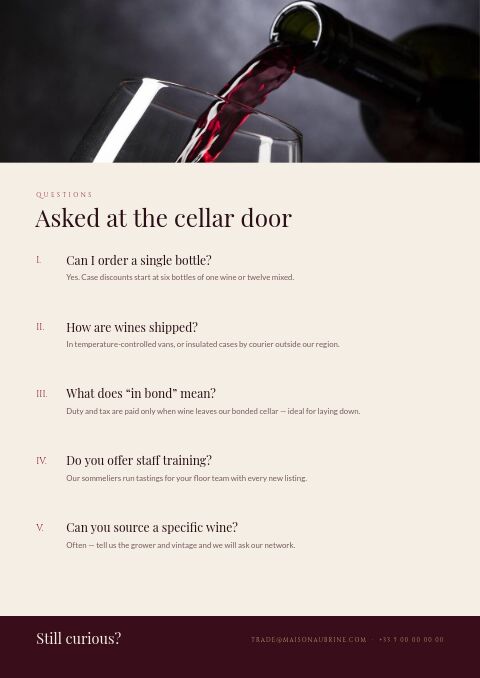
Seven covers in front, band, framed, poster, split, magazine and sticker styles, then 20 pages: welcome, contents, chapter divider, vine-to-glass lookbook, featured wine, story, team, ordering, most requested, en primeur offer, figures, tasting invitation, testimonials, FAQ, serving guide, cellaring, contact, terms, a framed blank and a back cover. Matching product pages and mosaic layouts are included.
Can I show trade prices to the trade and retail prices to everyone else?
The simplest way is two editions. Keep the trade edition with ex-tax prices and case discounts, and protect its flipbook link with a password. Make a second edition for private clients with consumer prices, or share it as a retail flipbook that checks out at Shopify. Product cards can also show compare-at and discount prices when a bottle is on offer.
How should a wine list be organized?
Most merchants group by style first (sparkling, whites, rosé, reds, sweet and fortified, then spirits) and by region within each chapter, ordering wines from lighter to fuller or from lower to higher price. Keep the structure the same every edition so regular buyers know where to look, and add a producer index if the list runs long.
What serving temperatures should a wine catalog give?
Sparkling wine is served coldest, about 43–46 °F (6–8 °C); whites around 46–54 °F (8–12 °C); light reds slightly cool at 54–57 °F (12–14 °C); and full-bodied reds at 61–64 °F (16–18 °C). Aged spirits are usually served at room temperature. Printing these ranges helps restaurant staff and home buyers get more from each bottle.



Start your Wine & Spirits catalog
Pick this template, add your products and download a print-ready PDF or share an online flipbook. Free plan available, no card needed.